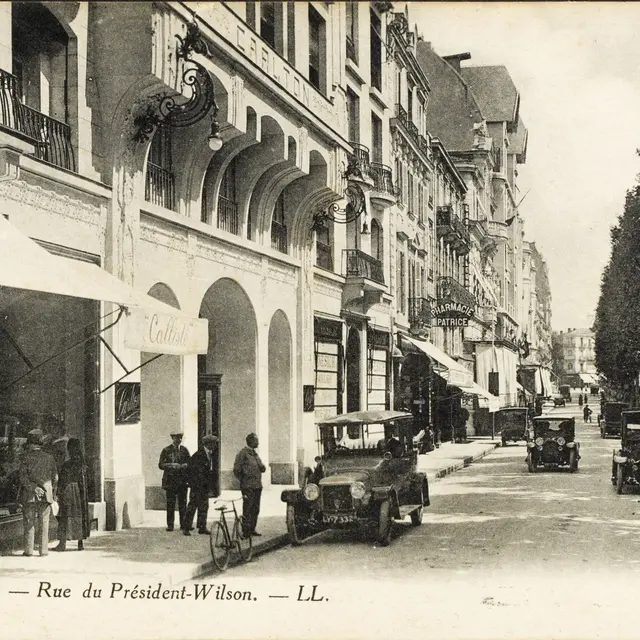
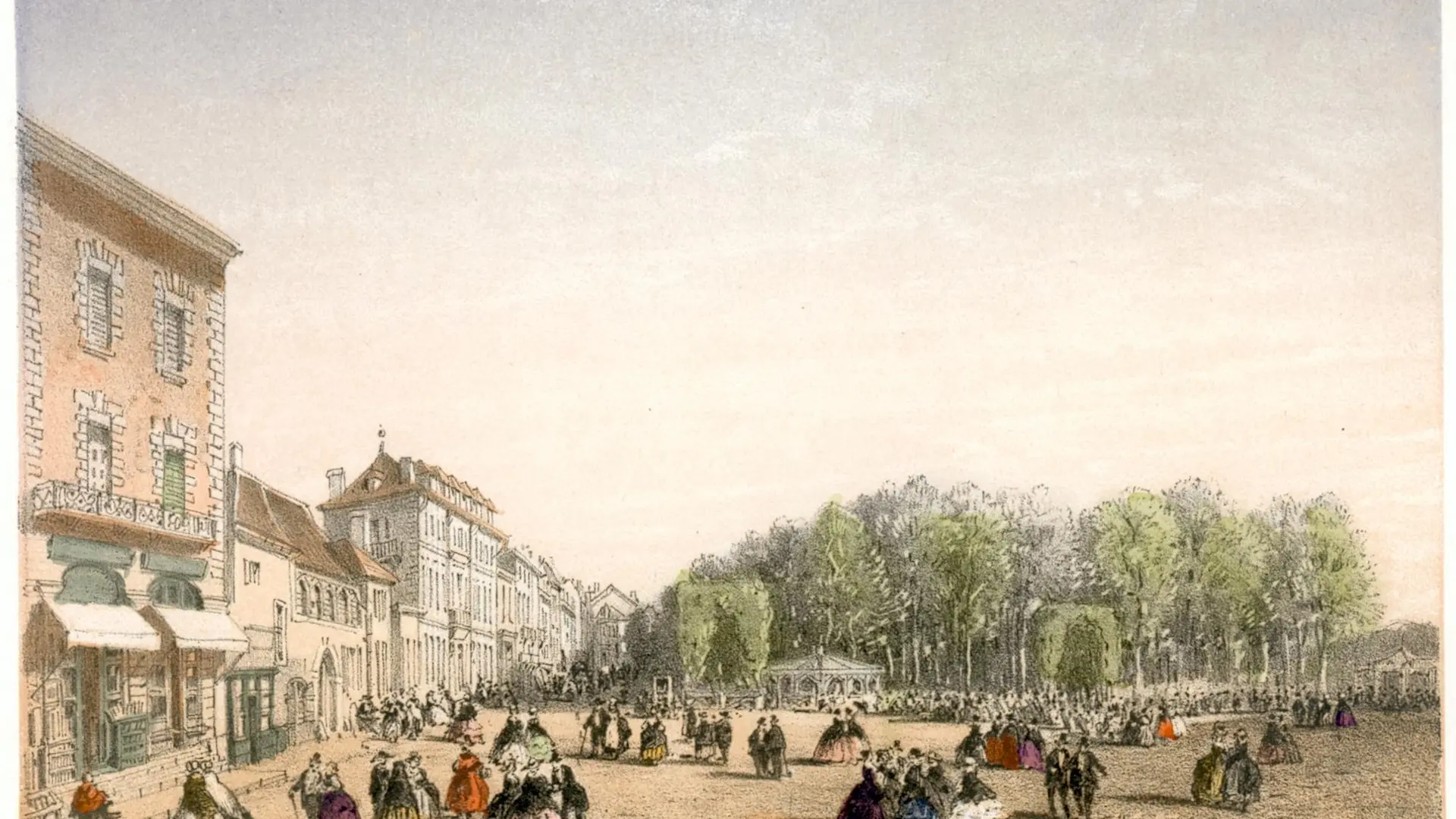
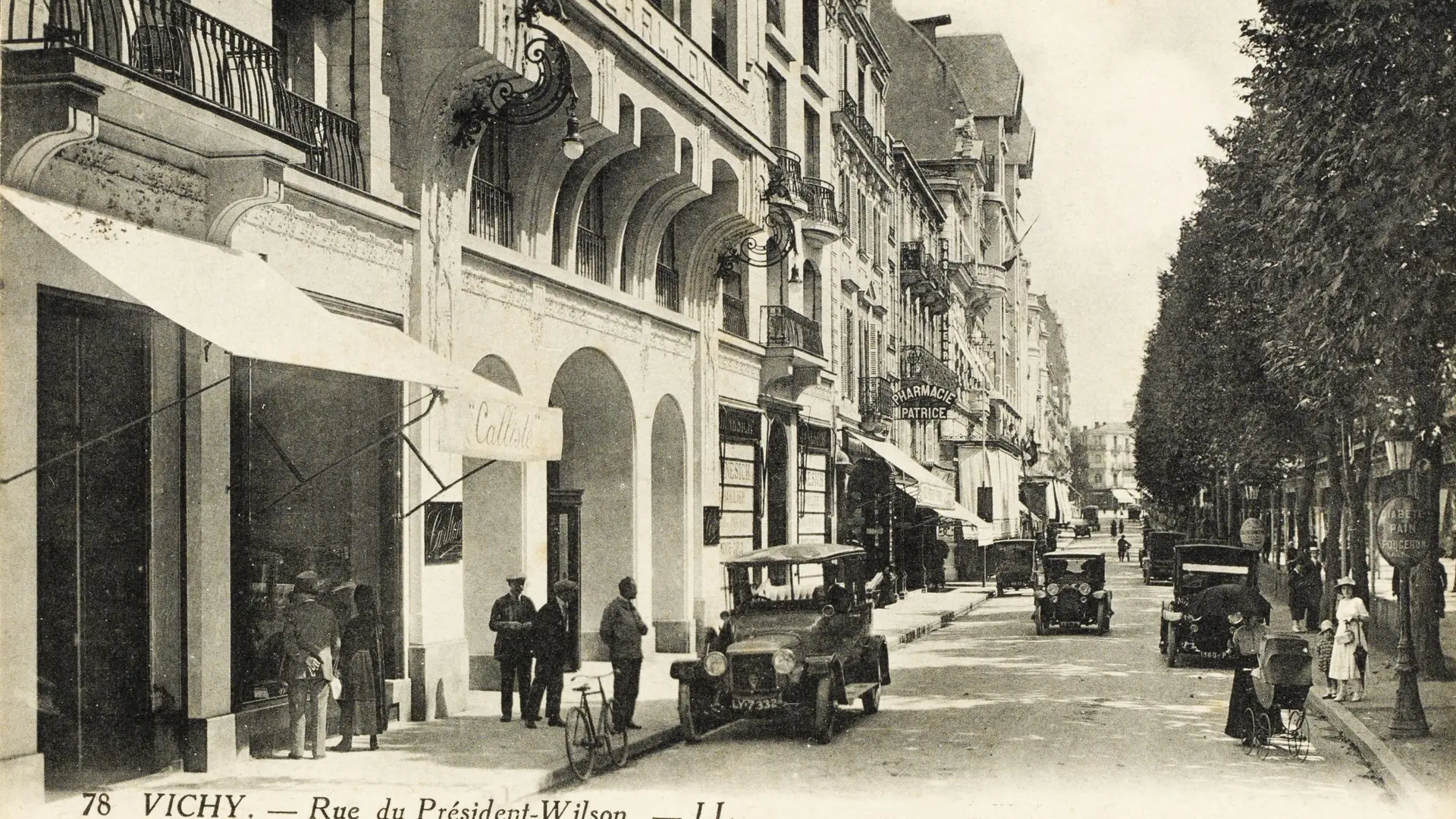
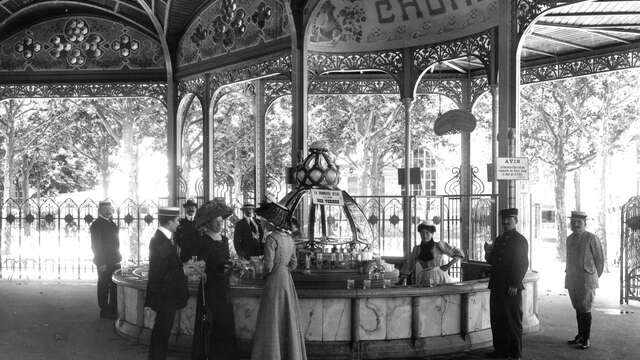
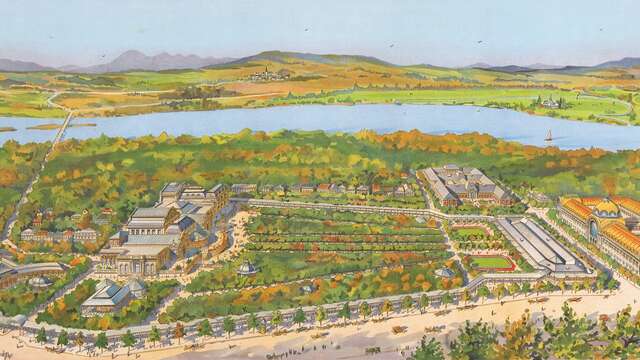
Bolstered by the opening of the Parc des Sources in 1812, this roadway, which linked the fortified city to the thermal baths district, was rapidly divided into plots and developed by hoteliers and merchants who found prime locations here, close to the springs and the promenade gallery.
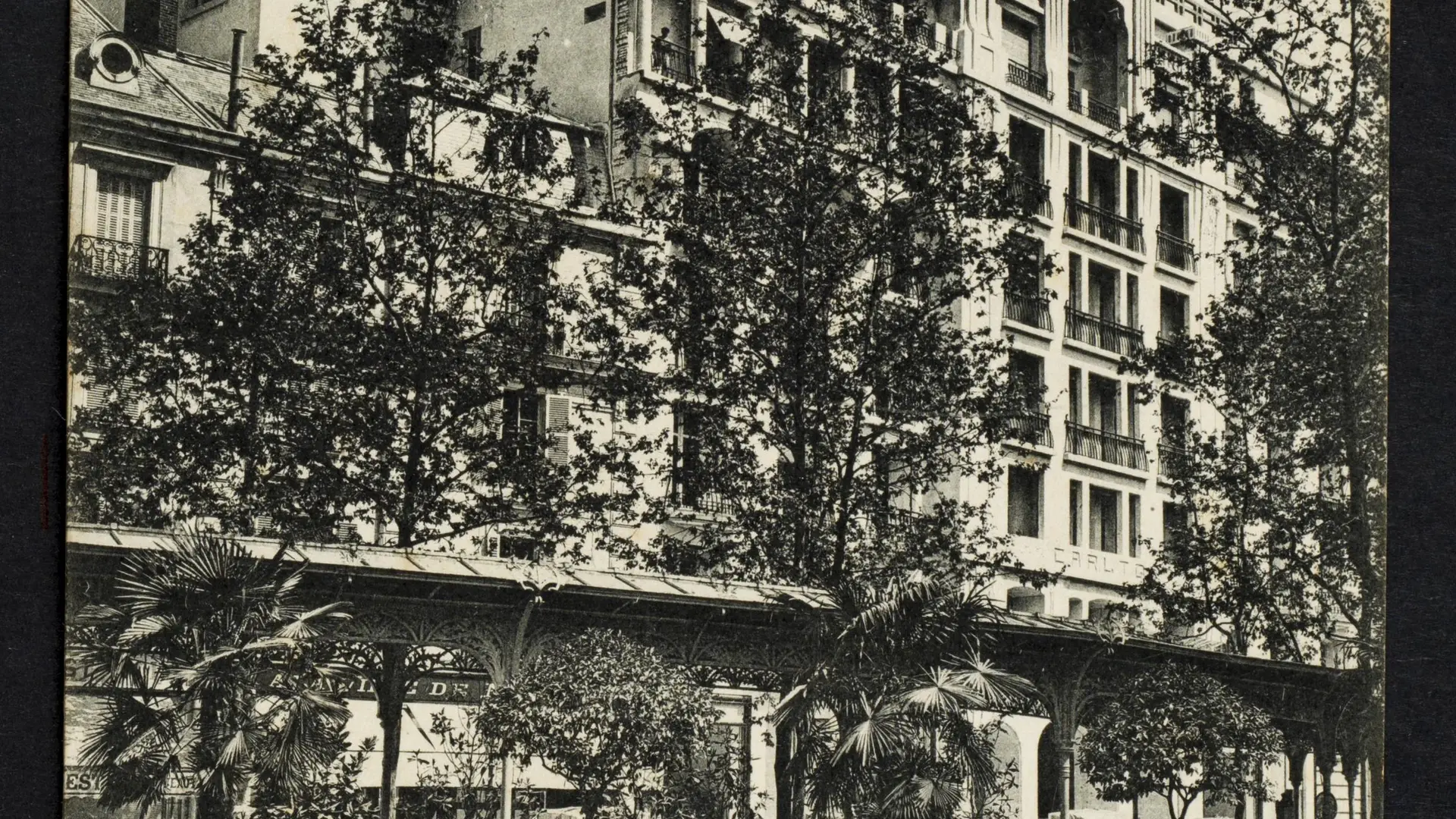
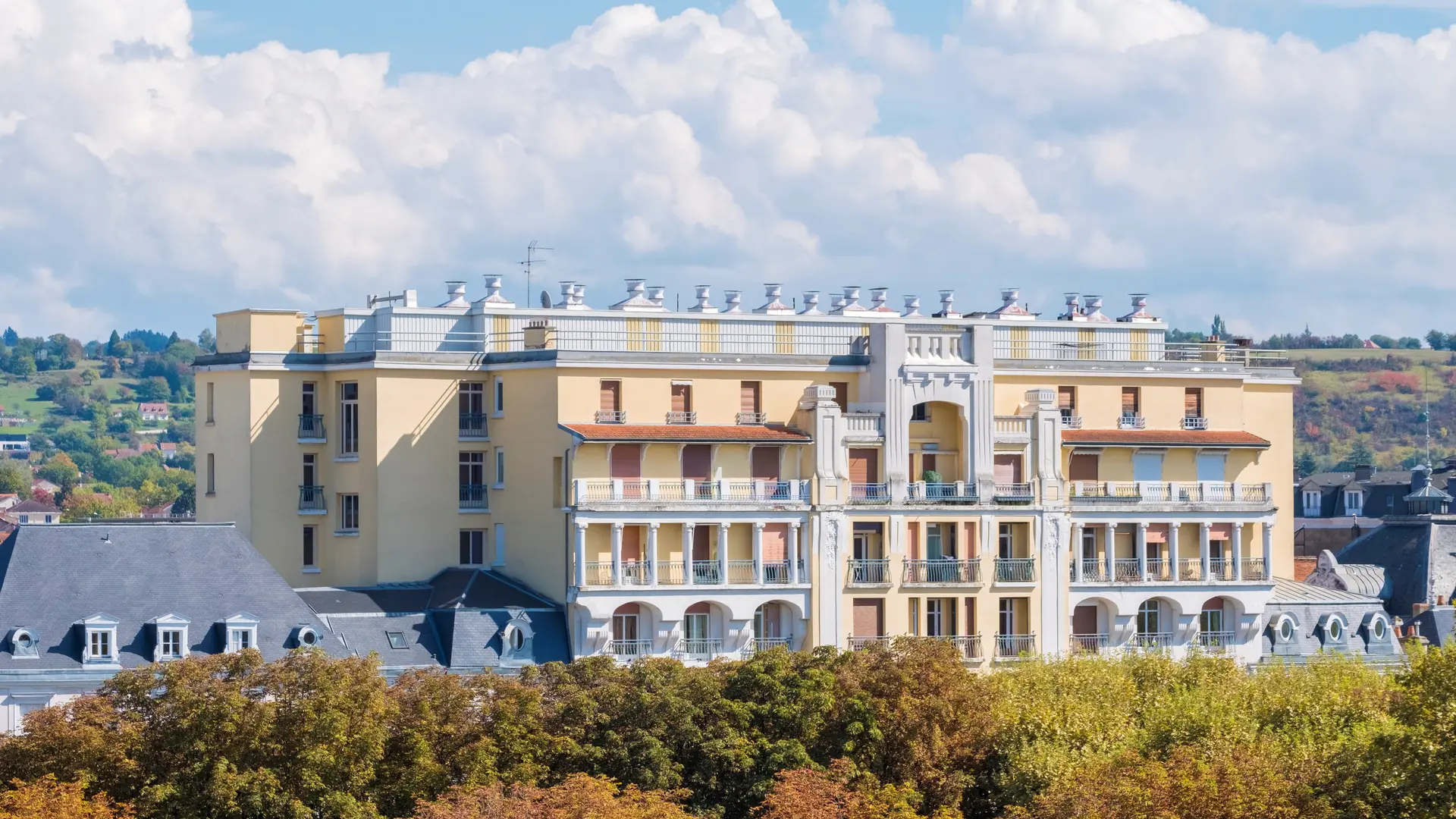
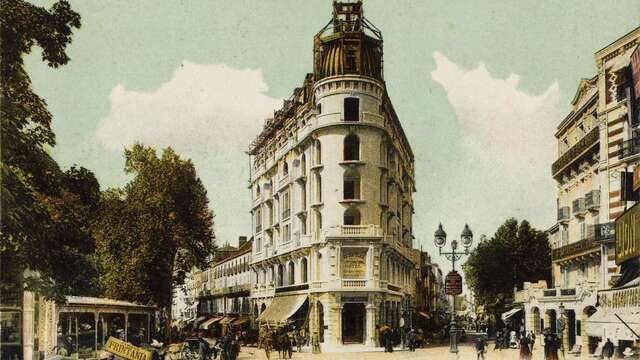
The first third of the 19th century saw the construction of the Hôtel des Bains at N°32, followed by the Guillermin, later the Carlton, at N°28. Taking advantage of advances in the hotel industry, they gradually developed into first-class establishments: the Hôtel des Bains was enlarged by the architect Ernest Mizard in 1897, while the Carlton was rebuilt by René Moreau in 1912, one year before the L'Amirauté, at N°20, built by Antoine Chanet.
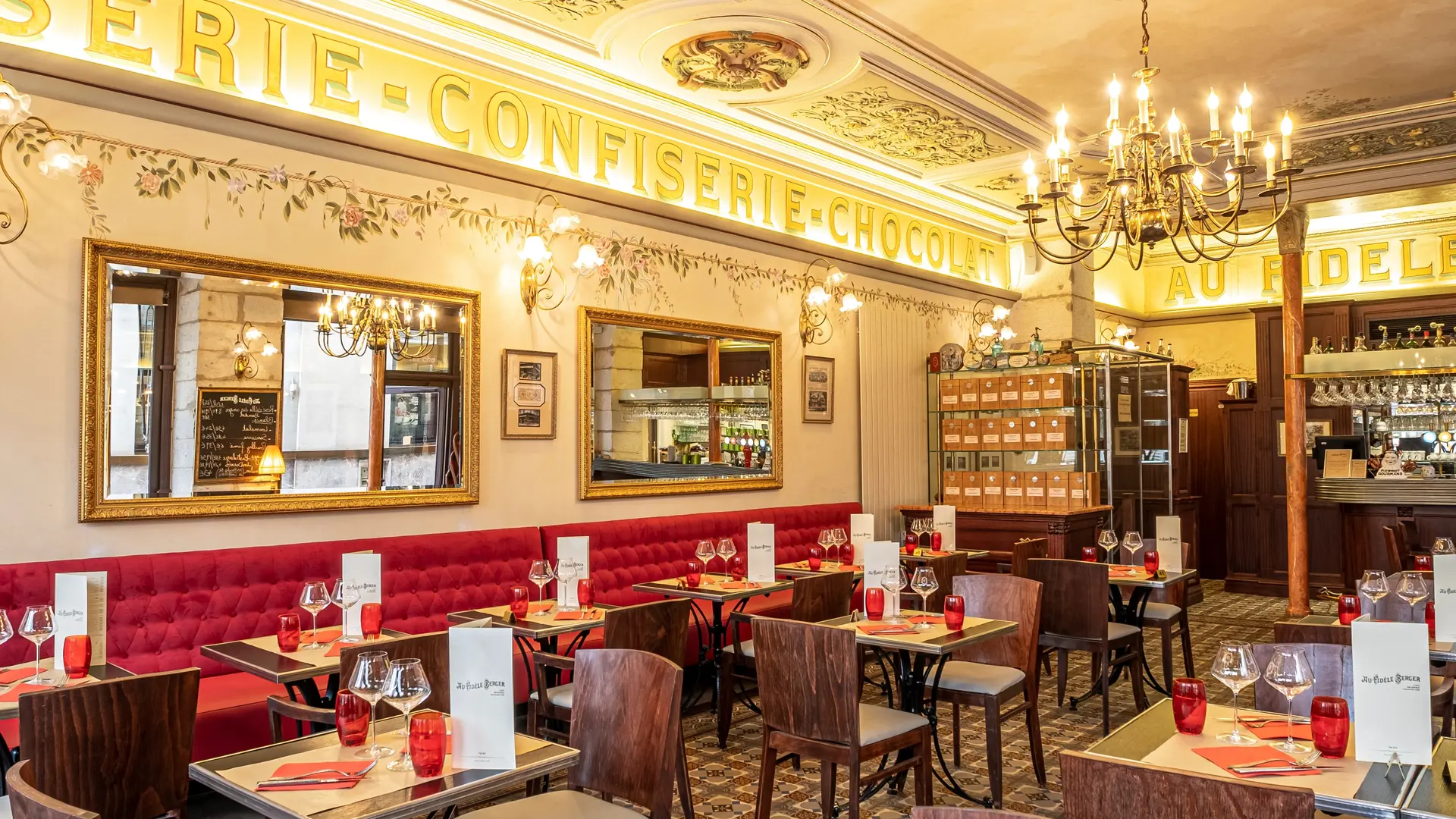
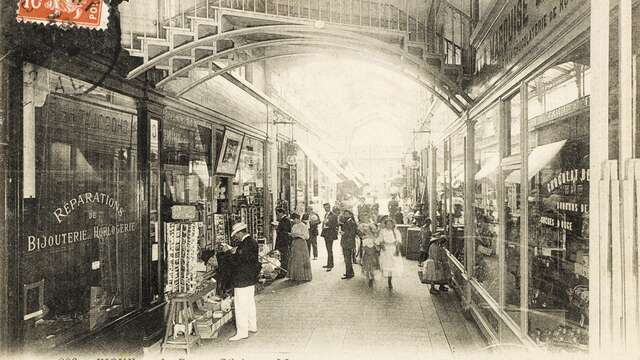
Most of these hotels originally had gardens perpendicular to the street, which were gradually sacrificed to create streets or passages suitable for the establishment of businesses. Passage Giboin (1887) and Passage de l'Opéra (1905) replaced the courtyards of the Hôtel Mombrun; from the outset, the Passage de l'Amirauté was incorporated into the design of the eponymous hotel. These locations were especially popular with luxury and costume goods brands such as the jeweller Henry Lyon, the leather goods specialist Lancel, and the confectioners Au Fidèle Berger or A la Marquise de Sévigné.